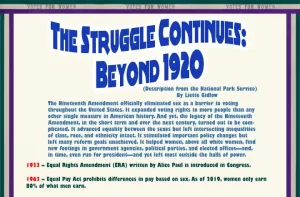
Votes for Women — Panel 11: The Struggle Continues: Beyond 1920
Hardly the end of the struggle for diverse women’s equality, the Nineteenth Amendment became a crucial step, but only a step, in the continuing quest for more representative democracy.
Home » History » Historic Events » Page 3
Hardly the end of the struggle for diverse women’s equality, the Nineteenth Amendment became a crucial step, but only a step, in the continuing quest for more representative democracy.
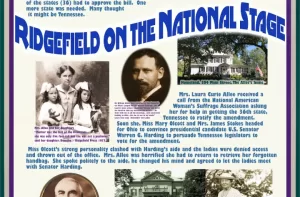
Congress passed the 19th Amendment prohibiting discrimination based on one’s sex on June 4, 1919 but in order for the amendment to become law three-quarters of the states (36) had to approve the bill. One more state was needed.
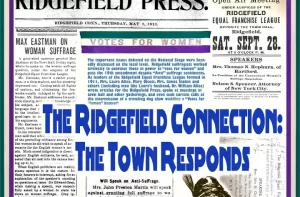
The important issues debated on the National Stage were heatedly discussed on the local level. Ridgefield suffragists worked tirelessly to convince those in power to “vote for women” and pass the 19th amendment despite “Anti” suffrage sentiments.
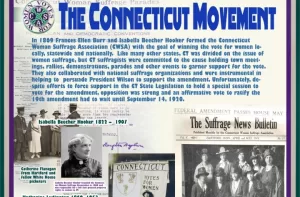
Like many other states, CT was divided on the issue of woman suffrage, but CT suffragists were committed to the cause holding town meetings, rallies, demonstrations, parades, and other events to garner support for the vote.
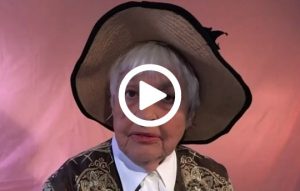
Dr. Darla Shaw talks about Mary Louise Olcott who lived at the northern end of Main Street.
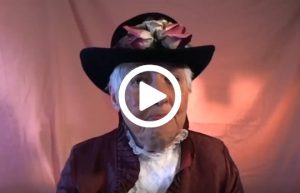
Dr. Darla Shaw portrays Laura Curie Allee Shields who lived on the southern end of Main Street.
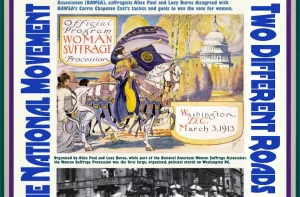
Differences in approach within the women’s suffrage movement, and the political opposition.
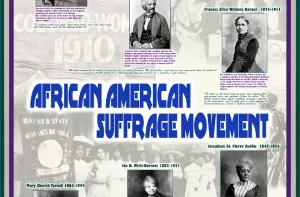
The women’s suffrage movement had roots that were contemporaneous with the abolition movement; in fact, early suffragists after the 1840s chose to delay work on their cause in favor of the abolition of slavery.
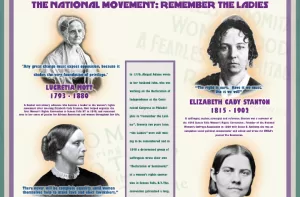
Highlighting the principal leaders of the American women’s suffrage movement.
View Panel 10, Ridgefield on the National Stage from the Votes for Women exhibit created by artist Bil Mikulewicz and researched by the League of Women Voters in Ridgefield and the Historical Society.