By Tyler Ingram, Ridgefield Historical Society Collections Manager
As we enter the 2026-2027 school year, let’s take a look back at one of Ridgefield’s most
prominent schools of the past: The Ridgefield School. The school was founded in 1907 by Dr.
Roland Jessup Mulford, and was originally located at the Ridgefield Inn, where 8 Main Street is
today. The inn accommodated Ridgefield visitors during the warm months and the school during
its off-season.
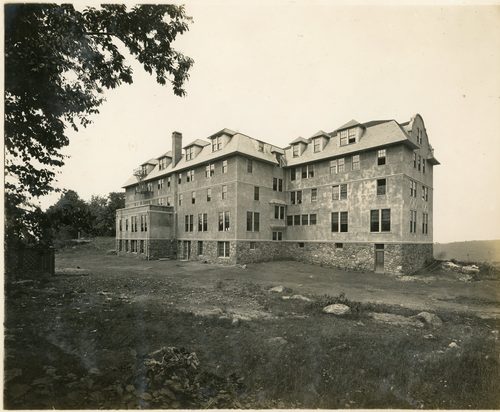
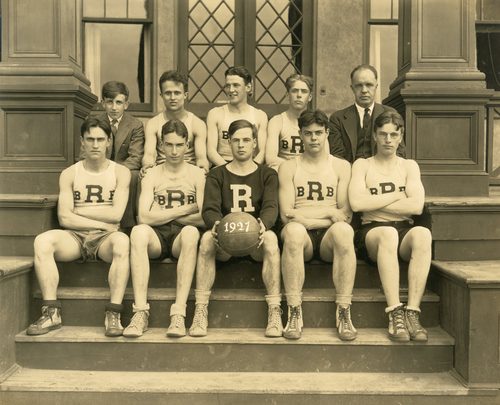
In 1911, the school was relocated to a site overlooking Lake Mamanasco on 803 North Salem Road, where it remained until it closed in 1938. The school advertised itself as having a prime location for outdoor activities, and emphasized “sympathetic cooperation, to develop in its boys self-respecting manliness, Christian character, and active American citizenship.” Boys ages 11-18 boarded at the school, and engaged in topics to prepare themselves for college, as well as mandatory sports and extracurricular theater clubs.
The school building at Lake Mamanasco was designed by Henry Edwards Ficken, and consisted of four stories of classrooms and dormitories meant to house 54 boys and seven headmasters. The 115-acre property also had large athletic fields for football, baseball, and tennis, a large gymnasium, and a boathouse near the lake for rowing and ice hockey in the winter.
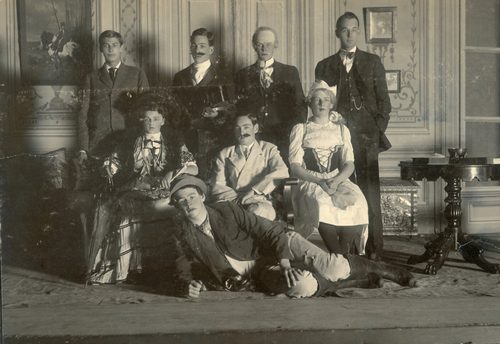
The Dramatic Club put on several plays and vaudeville shows as fundraisers, including
“Confusion”, which was reviewed by the Ridgefield Press in 1913. They wrote “The former presentation of this play was excellent but that of Friday evening was remarkably clever and even better than before. Everything went along smoothly and not once did enthusiasm lag.”
Students not only emerged with an accomplished education, but remembered their time in
Ridgefield fondly. The boarders, who mainly came from cities outside of Connecticut, engaged
in small town life, enjoying activities like the bowling alleys at Congregational Church and
Bissell’s Soda Fountain on Main Street. They were not without homesickness, however. A 1916
letter (2004.301.0061) from Thompson Derr, a student at the school, to his mother reads: “If I
have to go to school next year at all, I would rather come here it is not that I am so very
dissatisfied with this, but I miss home terribly.”
Financial woes were a constant problem for the school, and as the Great Depression took hold,
public schools became more financially appealing. By 1938, the costs of maintaining the
property were no longer sustainable, and the school closed its doors for good.
The building later housed the Chekhov Theater Studio from 1939 to 1941 and the property was purchased by Francis D. Martin, local jeweler, banker, and philanthropist, in 1943. The school buildings were incorporated into Martin’s Far-Vu farm property, which housed Easter services, barn dances, and many other social events. When Martin sold the property in 1981, the profits were generously donated to the Boys Club, Keeler Tavern, Ridgefield Library, St. Elizabeth Seton church, and the Methodist Church.
Photograph Identification, all from the album (2011.319.0061)
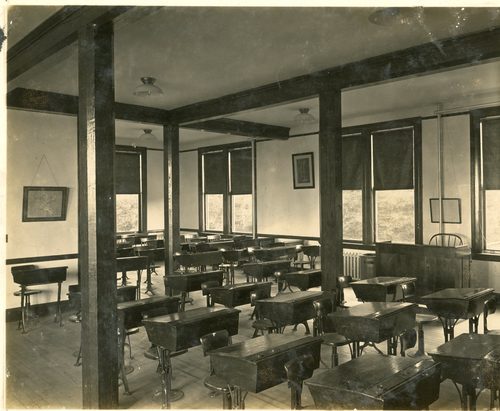
- Interior classroom at Lake Mamanasco property, year unknown.
- Exterior rear view of Ridgefield School for Boys at Lake Mamanasco site, year unknown.
- Ridgefield School for Boys’basketball team.
- Ridgefield School for Boys’ dramatic club, year unknown.