Related content https://ridgefieldhistoricalsociety.org/mad-for-modern-a-japanese-influenced-modern-house-talk-garden-walk/
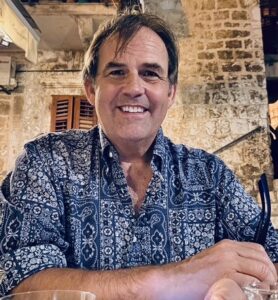
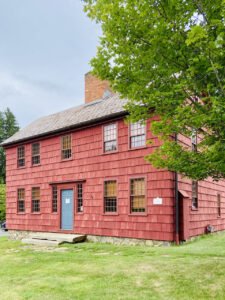
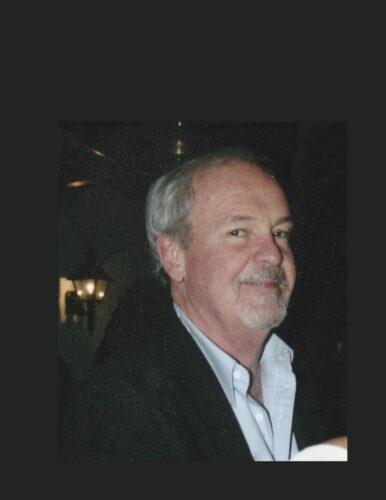
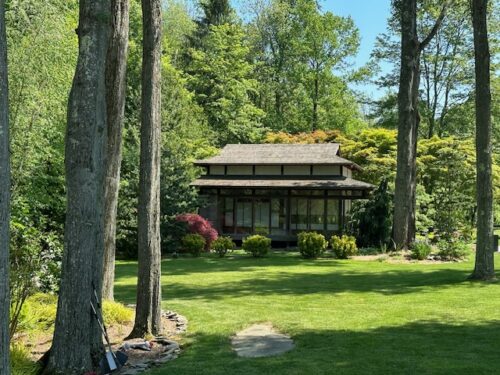
Cultural historian E. Michael Gerli will share insights into his extended family’s legacy and impact at the former Gerli summer home in Ridgefield, CT, as part of “Japanese-influenced Modern with a Story”, an afternoon house talk and garden walk on Sunday, June 7. Limited tickets, available only in advance, are on sale now.
What’s your connection to the Gerli estate?
The home there was created in the 1930s by my great-uncle Paolino Gerli, who was already a prominent silk trade importer in New York City at the time. By then, he had also become a great Japanophile, and the home and garden reflected his interest and respect for that culture. There is a simplicity and beauty in that aesthetic that feels very contemporary.
What will people learn from your talk?
The history of the Gerli family on business and trade is a fascinating one, in the way it tracks and reflects major historical sweeps of the last 100 years. Paolino, his younger brother, and several uncles, were quietly instrumental in waves of major economic and geopolitical change throughout the 20th century and across the U.S., but also throughout the rest of the Americas, Europe and Asia.
What sparked Paolino’s interest in Japan?
Silk, of course! The Gerlis were heavily involved in the silk industry for generations in Italy before Paolino’s uncle Emmanuel moved to the U.S. in the 1870s and started E. Gerli and Co. here. As Japan opened to the West at the end of the 1800s, the Gerlis saw a huge opportunity to export Japanese silk. Paolino himself spent more than two years in Japan around 1919. He came back with great business opportunities, but also a real appreciation for Japanese culture and aesthetics.
What was the silk trade’s importance?
While we think of silk as a luxury item today, originally it was also a highly valued industrial fiber, prized for its strength and durability. It had all kinds of commercial uses, for centuries. Family records have some of those early Gerlis using the family silk to build hot air balloons in the 1780s! Silk as an important global commodity stayed true well into the post-WWII period, when man-made alternatives, like rayon, and other materials became available.
What are some of the key accomplishments you’ll touch on?
Paolino lived a very long life, and stayed active and engaged for most of it. It’s hard to imagine that someone who traveled to Japan just 65 years after Japan opened to the West, later travelled with the Nixon delegation to China in 1972, but it’s true. He lived a remarkable life. On a personal note, he was also just a very kind and generous individual. I’ll be pleased to share some stories about him, and other ancestors, and in such a beautiful setting. I look forward to my visit!
E. Michael Gerli teaches Iberian and Latin American Cultures. He has a long and distinguished academic career, with more than 200 published works and numerous awards and recognitions. He is the Commonwealth Professor Emeritus of Spanish and Medieval Studies at University of Virginia, and currently an adjunct professor at Stanford University.