
By Dr. David Leslie
Now that winter is upon us, laboratory staff at Heritage Consultants, LLC have been working to identify the metallic artifacts recovered over the past year as part of the investigation into the Battle of Ridgefield. Many of these artifacts are lead musket balls that were impacted or dropped, and the identification of such artifacts entails measuring the diameter (to estimate the caliber of the weapon) or weight of the artifact, if it was impacted. Such measurements can provide crucial information to the analyst about the type of weapon used to fire the musket balls, and potentially inform us if the ammunition was carried or fired by American or British forces (see Blog Post #3).
Many metallic artifacts, however, may have undergone significant corrosion prior to discovery by our metal detectorists and archaeologists. Heavily corroded artifacts can be incredibly challenging to identify, such as buttons or coins. These types of artifacts, however, present unique opportunities for archaeologists to date archaeological sites, because clothing styles and use of coins changes generally on a decade (or shorter) scale, offering exceptional evidence for dating artifacts and occupations to a particular time period (such as the 1770s, or Revolutionary War era). The identification of these types of artifacts is also important, because it can help archaeologists winnow out artifacts that pre-date or post-date the period of interest, in this case a single day, April 27, 1777.
To-date, Heritage has inventoried 588 artifacts as part of the metal detection and excavation effort, although some of these are also artifacts from the Ridgefield Historical Society’s collection that predates the recent archaeological work. Of these artifacts, 334 are metallic, and 32 are represented by buttons, as well as four coins. Many of these artifacts were heavily corroded and weathered and will eventually undergo chemical conservation to stabilize them from any additional erosion, but also to clean the artifacts and determine if any identifying features can be gleaned. Prior to this conservation work, however, Heritage partnered with Kurt Frederickson of Scientific Imaging Services, LLC, to conduct Reflectance Transformation Imaging (RTI) on select metallic artifacts recovered from these recent investigations.
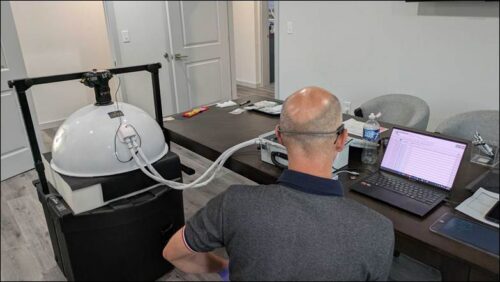
RTI is a photographic technique where multiple photographs are taken from a fixed position above a subject with controlled lighting, to virtually and interactively reveal characteristics of an imaged surface. Below is an example of the set up that Kurt uses to conduct the RTI, as well as a selection of artifacts before and after they were imaged via RTI, as well as standalone RTI images. The level of detail that is identifiable on these artifacts is quite stunning, and while some of the recent identifications indicate that several artifacts post-date the Battle of Ridgefield, this additional context is crucial to our reconstruction of the events of the Battle. RTI has been a powerful tool helping us to not only identify artifacts, but also to glean information about levels of corrosion on them prior to chemical conservation.
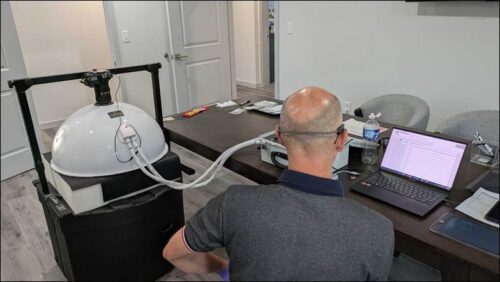
Kurt conducting RTI beneath the white dome, with a fixed position for the digital single lens reflex camera, and with various lighting of the artifact beneath the dome throughout the image capture process.
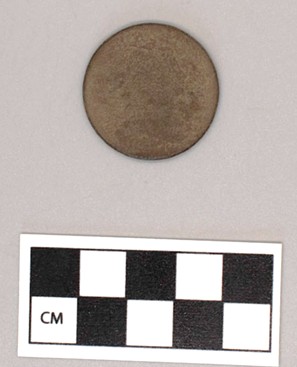
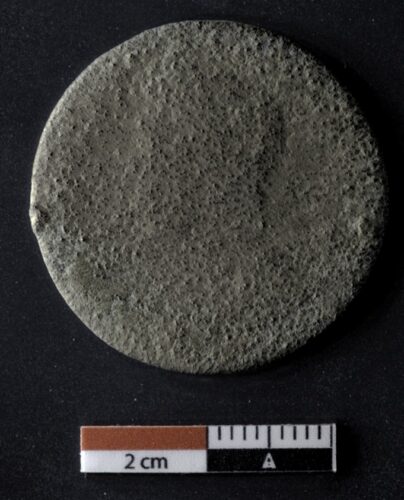
Example of normal photography (left) and RTI image (right) a faint silhouette is visible in the image to the image to the right, which Heritage has identified as a George II half penny, in general use between 1729 – 1754, but still in circulation during the American Revolution.
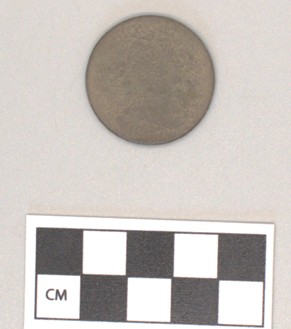
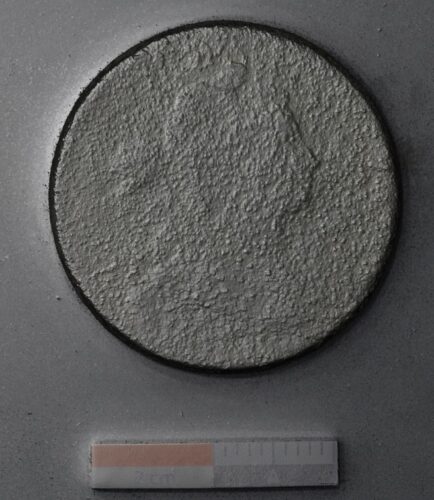
Normal photography (left) and specularly enhanced RTI image (right) of a Liberty Cap one cent, in circulation between 1793 – 1796. Silhouette of Lady Liberty is slightly visible in normal image, but much more enhanced via RTI.
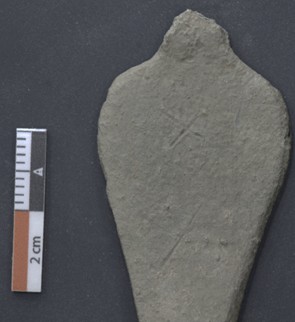
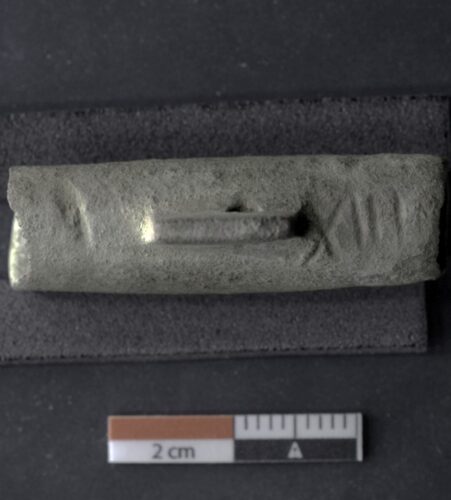
Left: RTI image of dog nose cast pewter spoon, with incised “X” and “/”, possibly indicative of an individual’s mark on the spoon; Right: RTI image of copper ramrod pipe engraved with “XIII”, from a British land pattern musket.
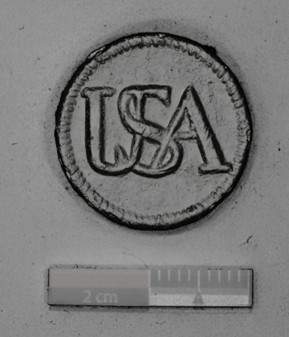
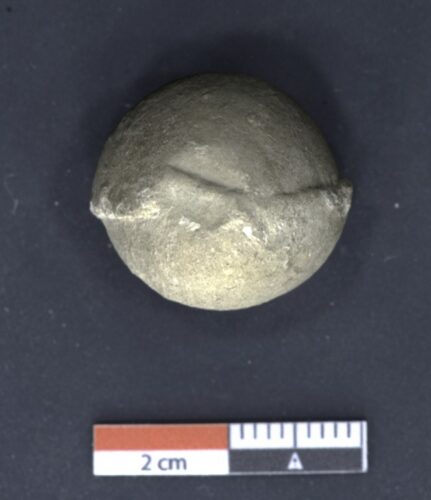
Left: Specularly enhanced RTI image of an enlisted Continental Army USA button; Right: RTI image of a 0.68” diameter British musket ball (Brown Bess 0.75 caliber musket), poorly cast, with visible seams and casting sprue.
The Battle of Ridgefield archaeological project, funded by a National Park Service grant, is a project of the Ridgefield Historical Society, with Heritage Consultants LLC, the professional team charged with exploring and documenting evidence of the battle’s boundaries, engagements and participants. A first phase of this effort was completed in 2022, when documentation and mapping were undertaken. Now, hands-on archaeological work is the primary focus of the team, which has been working at a variety of locations throughout the battlefield area. Monthly blog posts by the archaeologists provide updates on discoveries.